
Just as we humans carefully manage our health to maintain high standards of well-being, the intricate balances that regulate the marine ecosystem also require vigilant observation and continuous monitoring to identify any early indicators that could negatively impact the health of the ocean. While the sea can handle natural extreme events like storms and seismic shocks, thanks to its ability to heal and restore itself, it is facing serious threats from what we do. Incidents like oil spills can cause immediate damage, harming marine life and ecosystems. Other impacts of a longer-term nature, such as plastic waste, chemical pollution, overfishing, and climate change, are leading to cumulative pressures that could push the ocean to tipping points where it can no longer recover.
The health of the sea matters because it sustains life on Earth. The ocean produces much of the oxygen we breathe and absorbs large amounts of carbon dioxide, helping to regulate the global climate. The sea also supports billions of people by providing food, jobs, and economic stability. Beyond this, it protects extraordinary biodiversity and holds untapped scientific and medical potential.
As we look more into the idea of the “blue economy” using ocean resources for economic growth, we need to remember that the ocean has its finite carrying capacity. The EU has introduced several supportive policies like the Marine Strategy Framework Directive (MSFD), the Common Fisheries Policy and more recently the European Ocean Pact to strike a balance for ocean sustainability. One important goal is to assess the “Good Environmental Status” (GES) of European seas by looking at ecological, chemical, and physical health indicators. Yet, achieving GES has proved to be a tough task, and sadly, we’re falling short. Key issues include a lack of data in critical areas, difficulties in sharing and integrating information, and limited knowledge to observe and understand the full complexity of marine ecosystems.
Under the legal framework of MSFD, the EU countries were asked to develop strategies to reach GES by 2020, using an ecosystem-based approach. While the MSFD uses 11 key indicators to track progress, we know that simply measuring things like water quality or fish populations isn’t enough. To truly understand the ocean’s health, we need better methods that account for the full range of changes in marine life and ocean conditions. MSFD practice today primarily relies on separate indicators measured at fixed locations. While useful, this approach does not always capture how dynamic and interconnected marine ecosystems really work.
Building on the achievements of the JPI Oceans Knowledge Hub S4GES (Science for GES), the PAGES project (Process-Based Approach for GES) aims to transform how Europe assesses the state of health of its seas. Specialists in marine ecosystem science from the Institute of Marine Sciences of the National Research Council of Italy (ISMAR CNR), the Royal Belgian Institute of Natural Sciences (RBINS) running under the Belgian Science Policy Office (Belspo), the Atlantic Technological University (ATU) in Ireland, and the Malta College of Arts, Science & Technology (MCAST) with funding by Xjenza Malta, propose a shift toward a science-based monitoring system. The PAGES consortium is further supported by in-kind contributions from CNRS-France, SZN-Italy; HEREON-Germany and OGS-Italy as well as a Scientific Board involving ISPRA-Italy and MI-Ireland. Prof. Aldo Drago is the MCAST principal investigator on PAGES and leads one of the project WorkPacksages tackling the science-policy interface.
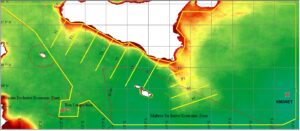
Central to the PAGES concept is the process-driven, adaptive monitoring approach where biodiversity and ecosystem responses are assessed in relation to the overlying dynamic oceanographic processes such a coastal fronts, filaments, upwelling dynamics, river plumes, and tidal cycles that drive the ecosystem. This implies replacing traditional fixed-station point sampling and to instead decide sampling strategies on the spot by following the evolving physical processes as they happen in near real-time through the use of satellite imagery and oceanographic modelling. The aim is to measure what truly matters — when and where changes actually happen.
Evidence from a proof-of-concept study off the Belgian coast demonstrated that biological responses, such as phytoplankton diversity, vary significantly during tidal phases; traditional monitoring often misses such variations or interprets them as unexplained data “noise”. Adopting a process-based approach has already allowed Belgian authorities to reallocate funds and ship time more efficiently, proving that it can reduce administrative costs while increasing the effectiveness of marine health assessments. The MSFD revision should moreover mandate the integration of innovative technologies, specifically environmental DNA (eDNA) metabarcoding, which provides an affordable and comprehensive proxy for characterizing entire marine communities—from bacteria and plankton to fish. Coupled with Lagrangian transport modelling this molecular data enables ecological connectivity assessments and provides a realistic interpretation of species dispersal. Furthermore, MSFD should support the development of “Augmented Observatories”, consisting of integrated infrastructures combining autonomous buoy stations, gliders, and ships-of-opportunity to provide synoptic, co-localized data that meets the needs of both scientists and policy makers. Structural changes are also required in governance, moving from a “silos” approach to “networked governance” that facilitates cross-disciplinary interaction between researchers and responsible authorities. By embracing advanced computational tools like network modelling and machine learning, the revised MSFD can simplify ecosystem complexity and provide a more robust, data-driven assessment of GES while optimizing public resource investment. This holistic strategy ensures that biological responses are never disentangled from the fluid-dynamical processes that rule their fate, leading to a more accurate and sustainable management of the EU’s marine environment.
The goal is to collect smarter data — targeted, efficient information that improves our understanding of how marine ecosystems change over time. We fully recognize that this is a major challenge, and we do not yet have all the answers. A simple way to think about it is this: monitoring the sea should be like going to the doctor. Regular check-ups are important, but when something unusual happens, we need to be ready to undertake more detailed tests and targeted action. PAGES aims to make marine monitoring more responsive, more intelligent, and better equipped to protect the health of our oceans.
“the aim is to measure what truly matters — when and where changes actually happen”



 MCAST Main Campus
  +356 2398 7100
 information@mcast.edu.mt