
The Malta College of Arts, Science and Technology (MCAST) is strengthening its approach to assessment as generative artificial intelligence becomes increasingly embedded in further and higher education.
In recent guidance to lecturers, MCAST’s senior management stressed that AI-detection software should not be the basis for academic judgement. The guidance, directed by Deputy Principal Ing. Pierre Dalmas, suggested that such tools can mistakenly identify students’ original work as AI-generated and fail to detect work produced using artificial intelligence.
Concerns about authenticity are to be addressed through the college’s updated Academic Integrity Policy. Lecturers are encouraged to emphasise assessment methods that allow students to demonstrate their knowledge and skills directly. These include practical assignments, oral examinations, presentations, demonstrations and supervised classroom activities.
 The approach reflects a broader shift in education, recognising that while AI is part of many students’ learning experience, assessment should focus on what learners genuinely understand and can apply. Staff remain responsible for evaluating student performance according to MCAST’s policy on the proper and ethical use of AI.
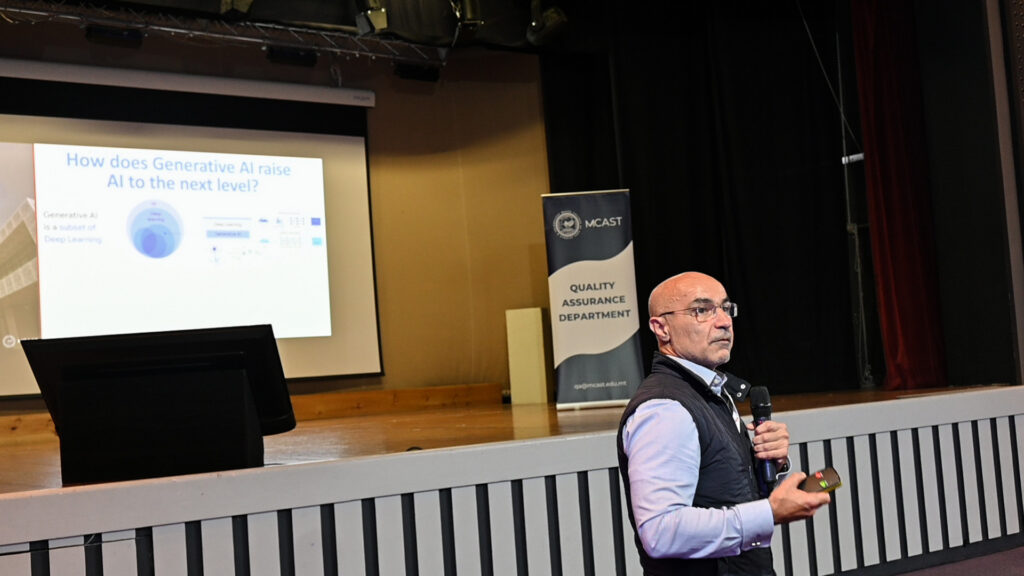
The message was reinforced during a Quality Culture Insights event organised by MCAST’s Quality Assurance Department on 13 May. The keynote speaker, Professor Matthew Montebello, head of the Department of Artificial Intelligence within the Faculty of Information and Communication Technology at the University of Malta, argued that generative AI should be seen not as a threat to assessment but as an opportunity to rethink it.
Addressing academic and administrative staff in MCAST’s Main Hall, Montebello said assessment should focus more on critical thinking, academic judgement and student ownership of learning. The challenge, he suggested, is not to exclude new technologies but to design assessments that make students’ thinking visible and their learning meaningful.
His presentation also explored responsible approaches to AI use, encouraging students to use multiple AI tools, seek ideas rather than ready-made answers, and remain transparent about how such technologies contribute to their work.
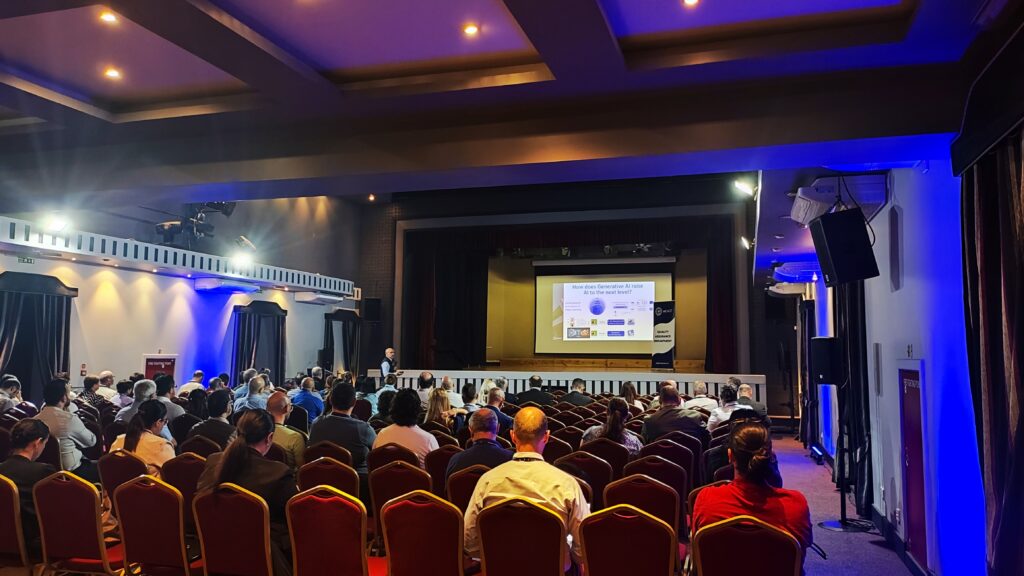
The event opened with an introduction by Dr Jacqueline Micallef Grimaud, Director of Quality Assurance, and concluded with an extended question-and-answer session.
This Friday 11 June the AI in Education: Ethics, Practice and TVET Transformation Conference at MCAST will explore responsible and effective uses of AI, with particular attention given to Technical and Vocational Education and Training (TVET) contexts. The conference aims to equip educators and researchers with practical insights, emerging strategies, and a deeper understanding of how AI can be thoughtfully integrated into educational environments.



 MCAST Main Campus
  +356 2398 7100
 information@mcast.edu.mt