
On 14th October 2026, MCAST’s Quality Assurance Department (QA) organised The MCAST Conference on AI in Further and Higher Education – one academic year later.
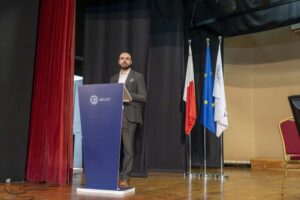
The conference was officially opened by the MCAST Principal & CEO, Mr Stephen Vella, followed by the input of Deputy Principal Ing Pierre Dalmas and the delivery of the keynote speaker Mr Neil Micallef from the Malta Digital Innovation Authority (MDIA) entitled Education Meets AI Regulation: The EU AI Act and Digital Omnibus in 2026.
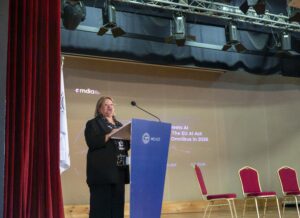
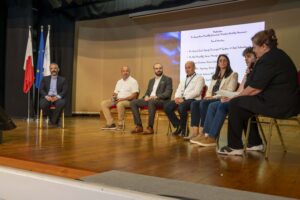
Academic leaders, researchers, policymakers, educators, administrative staff and students gathered for the conference, an event that provided an opportunity to reflect on the impact of Artificial Intelligence on teaching, learning and assessment following its rapid emergence in educational settings. The main topics discussed were: The evolving role of AI in teaching and learning; The opportunities presented by generative AI tools; Ethical and responsible use of AI in education; Academic integrity and assessment challenges; Preparing students for an AI-enabled workplace; Professional development for educators. A recurring message throughout the conference was that, one academic year later, AI tools are fast becoming widely accessible and educational institutions have moved beyond initial uncertainty towards a more informed and strategic approach. During the panel session moderated by Dr Jacqueline Micallef Grimaud, panel members shared practical examples of how AI has been integrated into their daily practice while maintaining a strong focus on quality learning outcomes.
Panel members, including Mr Gerard Said – Deputy Principal IT Systems and Data Security, Dr Mario Cardona – Senior Lecturer III ICS, Mr Neil Micallef – Senior Manager (Artificial Intelligence) MDIA, Mr Francis Inguanez – Senior Lecturer II, IICT, Ms Daria Tanti – Lecturer IICT and Mr Kieran Pisani – B. Sc. (Hons.) in Digital Games Development, 2nd year student IICT, highlighted the importance of developing AI literacy among both educators and students. Several speakers stressed that future success will depend not only on technical competence but also on critical thinking, ethical awareness and the ability to work effectively alongside emerging technologies.
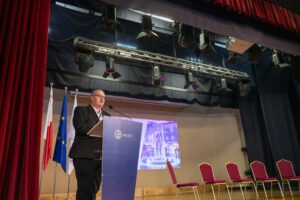
The conference reinforced the College’s ongoing commitment to innovation, digital transformation and excellence in teaching and learning. It also provided valuable insights that will continue to inform future initiatives aimed at equipping both staff and students with the skills required in a rapidly changing educational landscape. As AI continues to evolve, events such as this conference play an important role in fostering collaboration, sharing best practice and encouraging meaningful dialogue across the education sector. The discussions demonstrated that while technology will undoubtedly influence the future of education, the human element remains at the heart of effective teaching and learning.
For the second consecutive year, the conference gained national and international visibility through MDIA’s inclusion of the event in EU Code Week. EU Code Week 2026 ran from 10 to 25 October 2026, celebrating coding, computational thinking and digital creativity across Europe.
To view the presentation, please click on the link below:
Education Meets AI Regulation – The EU AI Act and Digital Omnibus in 2026



 MCAST Main Campus
 +356 2398 7100
 information@mcast.edu.mt