
– Typography as Voice: FSWS Collaborates with MCAST Institute for the Creative Arts
When education, design and social care intersect, the result can move beyond classroom learning and become a meaningful public contribution. This is exactly what took shape through a collaborative typographic project between the MCAST ICA and the Foundation for Social Welfare Services (FSWS), specifically its Directorate for Alternative Care (DAC). The initiative invited Graphic Design students to explore typography not only as a design discipline, but as a way of communicating children’s rights which is of particular relevance given the many vulnerable children and young people who make use of services with the DAC.
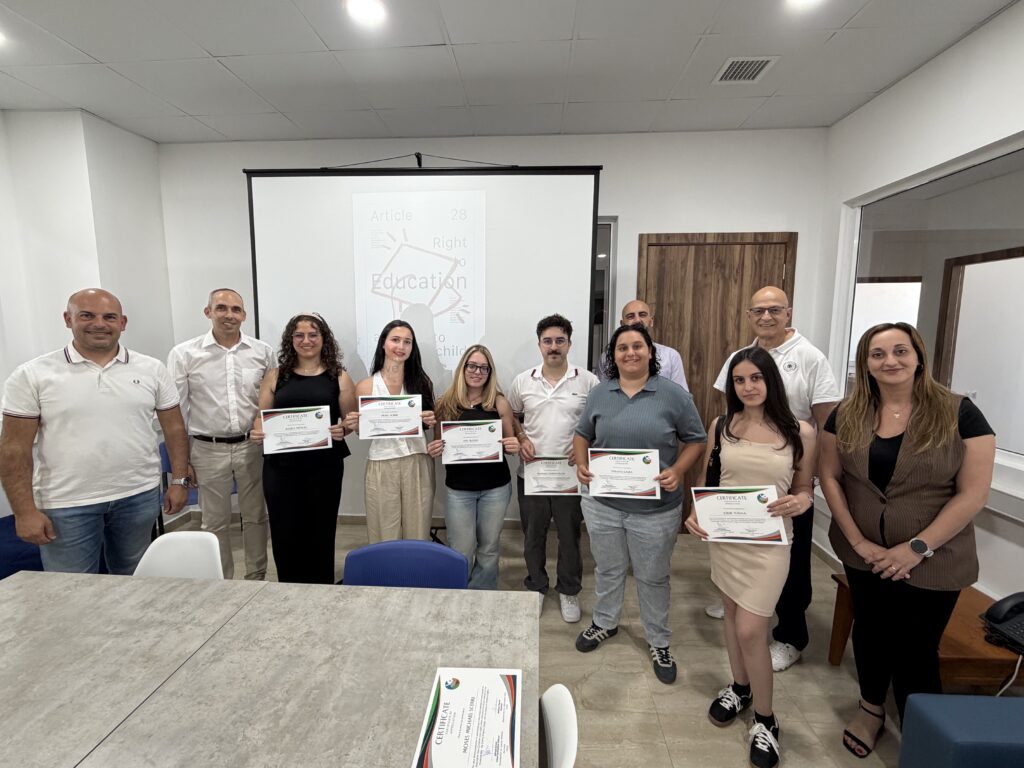 Dr Kevin Borg, Consultant Community Paediatrician leading the project, explained that at the heart of the project lies a simple but powerful ambition, to translate the theme of Children’s Rights into a visually compelling typographic experience. The DAC works to safeguard the wellbeing of children, vulnerable youth and young adults who are not living with their birth families. Its mission is centred on ensuring safety, stability and emotional support, while also amplifying the voices of those it serves. Within this framework, services such as fostering, adoption, aftercare, supervised access visits, youth programmes and community homes work together to provide a continuum of care that supports each child’s journey into adulthood.
The typographic assignment given to students reflects this ethos. They are asked to design large-scale posters that use type as the primary visual language. Rather than relying on illustration or imagery, students must explore how letterforms themselves can carry meaning. This includes experimenting with hierarchy, scale, spacing, alignment, contrast and expressive manipulation of typography. The challenge is not simply aesthetic; it is communicative. Each design must clearly express ideas connected to children’s rights while maintaining legibility and emotional clarity for a diverse audience.
 The initial engagement with students revealed a strong level of interest and sensitivity towards the subject matter. A classroom session introducing the project became more than a technical exercise, it evolved into a discussion about social responsibility, care systems and the lived realities of children and youth in alternative care. The response demonstrated how design education can be a platform for awareness, encouraging students to think critically about the social impact of their creative decisions.
As the project progressed, students submitted their typographic compositions for review. Eighteen posters were originally presented, each reflecting different interpretations of the brief. Following a collaborative evaluation process involving educators and FSWS representatives, sixteen works were shortlisted.
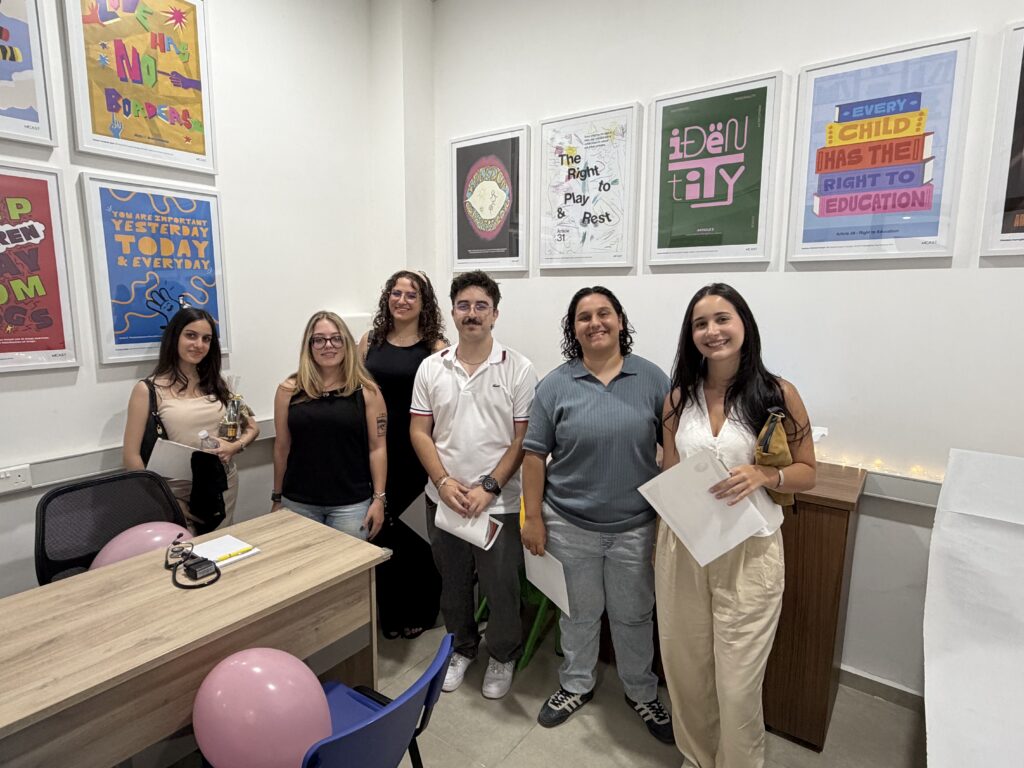
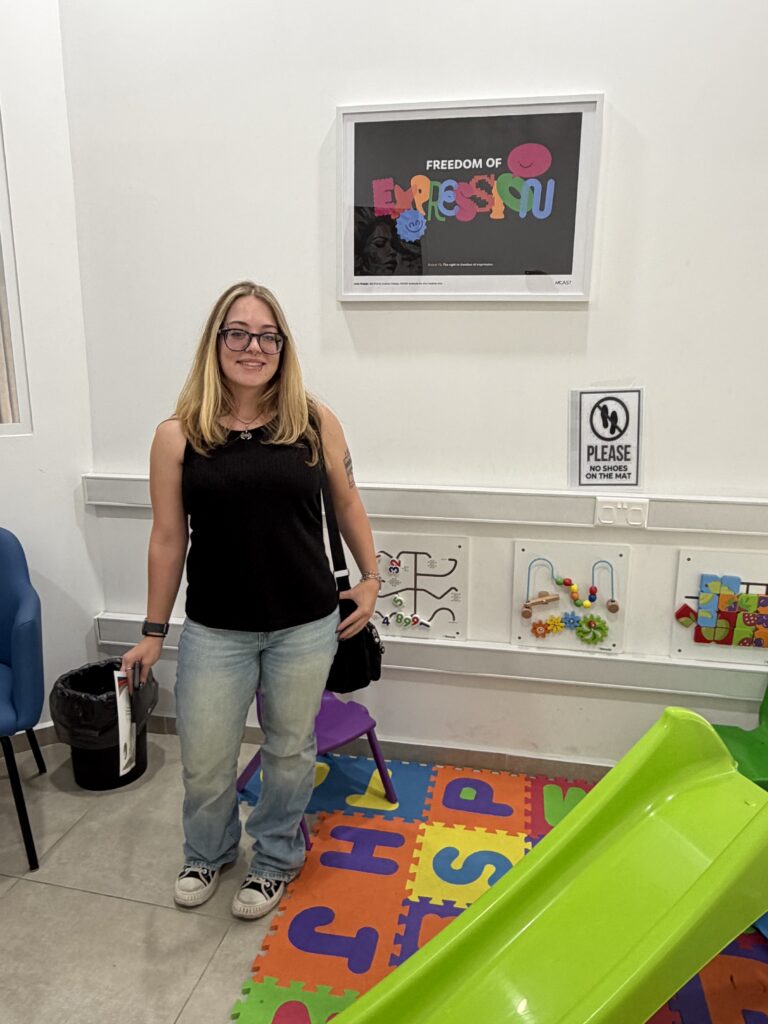
Institute and Subject Coordinator, Mr Darren Duncan together with Senior Lecturer, Mr Matthew Mamo who led the project, said that the shortlisted works have been produced in a larger 50×70 cm format, printed, framed and installed in the DAC’s new premises. The decision has been made to place the artworks primarily within clinical and counselling spaces rather than public corridors. These rooms, which host health reviews and therapeutic sessions for children and young people, offer a more intimate and appropriate environment for the work to be experienced. The intention is that the typography will contribute to an informative and reflective atmosphere, reinforcing messages of safety, dignity and children’s rights.
 This layered evaluation process reflects the collaborative nature of the project itself. It ensures that decisions are informed not only by design expertise but also by practical experience in child welfare and care environments. In doing so, it reinforces the idea that design does not exist in isolation, it operates within systems of meaning, responsibility and human impact.
Beyond the classroom and assessment structure, the project also connects to wider FSWS awareness efforts. Creative media, including previously developed music initiatives, have been used to highlight the experiences of children in alternative care, reinforcing the organisation’s commitment to multi-disciplinary advocacy. These parallel creative approaches, visual, typographic and musical, work together to broaden public understanding of children’s rights and the importance of supportive care systems.
Ultimately, this collaboration demonstrates how typography can extend far beyond its traditional role. When applied thoughtfully, it becomes a tool for storytelling, advocacy and emotional resonance. For the students involved, it is an opportunity to see their work enter a real-world context where it will be experienced by children, families and professionals. For FSWS, it represents another step in creating environments that are child centred and rooted in values that promote the child’s best interest first and foremost.



 MCAST Main Campus
  +356 2398 7100
 information@mcast.edu.mt