
The Malta College of Arts, Science and Technology (MCAST), and the University of Malta hosted a two-day hackathon called “NurseAI Hackathon: The Innovation Challenge.” It brought together over 180 second-year nursing students to develop AI-driven solutions for real-world healthcare challenges.
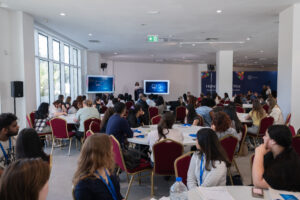
The event took place on April 29th and 30th, 2026. The first day was held at MCAST, and the second day was at the University of Malta’s Valletta Campus. Academics from MCAST’s Institute for Applied Sciences, Department of IT and AI, Centre for Learning and Employability, together with UM’s Faculty of Health Sciences, the Edward DeBono Institute, the Faculty of ICT joined industry experts and supported the hackathon, showing a shared commitment to innovation and teamwork in healthcare education.
The hackathon aimed to promote the practical use of artificial intelligence in healthcare. It encouraged collaboration between institutions and empowered students to design original, inclusive, and practical solutions to current challenges in practice. Participants worked in teams and took part in idea development workshops, mentoring sessions with experts in healthcare, artificial intelligence, and education.
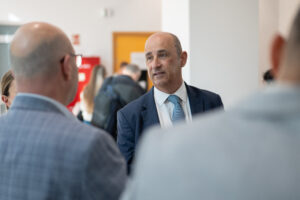
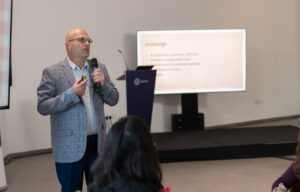
Opening the event, MCAST Principal and CEO Mr. Stephen Vella stressed the importance of blending technology with human-centred care. Drawing from his nursing background, he pointed out that while healthcare systems keep changing, the heart of the profession remains the same.
“Healthcare is about people. And people need people,” he said. “Artificial intelligence can support clinicians and improve outcomes, but it must be shaped by those who understand care best. Nurses must not only use these technologies but also help develop them to ensure they fit the realities of patient care.”
He also emphasised that collaboration between institutions is crucial. Partnerships like the one between MCAST and the University of Malta are vital for tackling complex challenges in healthcare and education.
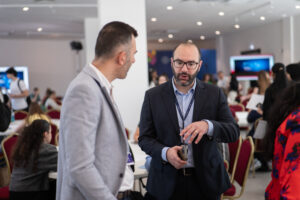
During the hackathon, students developed and refined their ideas, ultimately presenting their final solutions in a structured pitch format. A panel of experts evaluated each project based on originality, inclusivity, feasibility, and potential for implementation.
The programme included input from a variety of specialists, including those in artificial intelligence, healthcare innovation, and education. They guided participants in turning their ideas into practical solutions.
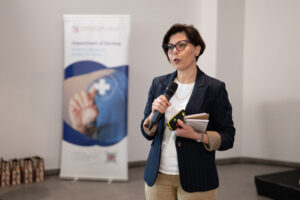
The event wrapped up with a final presentation session and the awarding of prizes, along with certificates of participation for all students involved.
This initiative was part of MCAST’s broader Vision towards 2030, which acknowledges the growing role of technology in shaping education and industry. By focusing on students and encouraging hands-on engagement, the hackathon showcased a proactive approach to preparing future healthcare professionals for a changing landscape.


 MCAST Main Campus
  +356 2398 7100
 information@mcast.edu.mt